Artificial Intelligence in Ground Robots: How Ukrainian Technologies Are Evolving
Ukraine's defense industry is actively integrating artificial intelligence into Unmanned Ground Vehicles (UGVs) to enhance autonomy and reduce the risks of loss due to electronic warfare.
 🧠AI Analysis
Photo: RBC-Ukraine
Key points
- Transition of UGVs from manual control to autonomy
- Implementation of autopilot systems and Backtrack functionality
- Use of artificial intelligence for threat recognition
- Combining real footage and synthetic data for AI training
Ukraine's modern defense industry is rapidly evolving from entirely manual remote control of Unmanned Ground Vehicles (UGVs) toward partial and full automation. According to analytical reports from specialized media, the transition to autonomous missions is a critical necessity on the battlefield, where communication with the operator often becomes a vulnerability due to enemy electronic warfare systems.
Key Technological Areas in UGV Development
One of the primary challenges remains the platform's complete dependence on uninterrupted connection. While navigating complex terrain, the operator is forced to constantly monitor every movement of the vehicle, risking its loss if the signal drops. To solve this problem, engineers are developing several key technologies, including autopilot systems capable of independently bypassing obstacles along certain route segments.
Another important feature is the Backtrack function, which allows the robot to automatically return along the traversed route in critical loss-of-signal situations. Additionally, artificial intelligence is actively deployed to detect threats, such as enemy FPV drones. This significantly reduces operator workload and enables simultaneous control of multiple platforms.
Development Challenges and Algorithm Training
The operation of ground robots in real combat conditions involves extreme difficulties: dust, mud, poor visibility, and constant radio interference. Algorithms must properly adapt to changing environments and make safe decisions. Achieving high threat detection accuracy requires continuous retraining of models using both real combat footage and synthetic datasets.
Source RBC-Ukraine — rbc.ua/ukr/news/nrk-aktivno-vikoristovuyut-shi-shcho-mozhut-1795429… ↗
Read next
 🇺🇦Ukraine
A Unique Archaeological Discovery: How a Farmer's Plow Uncovered a Royal English Secret
The remarkable story of finding the medieval Alfred Jewel highlights how agricultural labor can unexpectedly preserve world history.
 🛡️Security
Zelenskyy Reports on Updated Russian Strike Plans and Discusses Situation in Sumy Region
President Volodymyr Zelenskyy announced that military intelligence reported on updated enemy attack plans, while authorities addressed regional energy infrastructure repa…
 🛡️Security
Estonia Denies Reports That Trump Urged Europe to Stop Supporting Ukraine
Estonian Prime Minister Kristen Michal stated that Donald Trump never called on European nations to suspend aid to Ukraine, attributing previous reports to a translation …
 🛡️Security
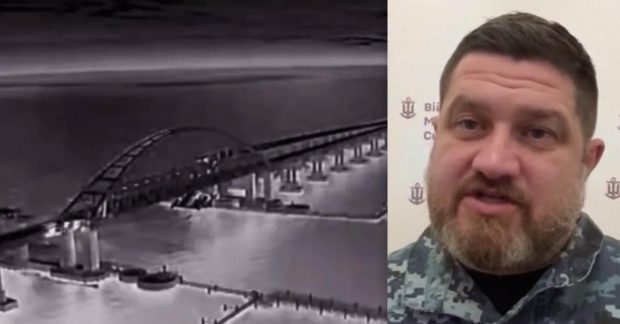
Crimean Bridge Strike: Ukrainian Navy Evaluates Russia's Ability to Unblock Kerch-Yenikale Canal
The destruction of the Crimean Bridge's arch has blocked the Kerch-Yenikale shipping channel. According to the Ukrainian Navy, Russia lacks the European equipment and cap…
 🩺Health
Atlantic Mackerel Surpasses Salmon in Omega-3 Content, Experts Say
Nutritionists highlight Atlantic mackerel as a budget-friendly and superior alternative to salmon for omega-3 fatty acids.
 🏛️Politics
DBR and SAPO Controversy: Accusations of Double Standards Amid New Investigation
A public debate has emerged over the State Bureau of Investigation following a sudden shift in stance from anti-corruption activists.