Historical Lessons of 'Dividing the World': Why Agreements Between Great Powers Often Prove Fragile
An analysis of historical attempts to divide spheres of influence between global leaders and their long-term effectiveness.
 🧠AI Analysis
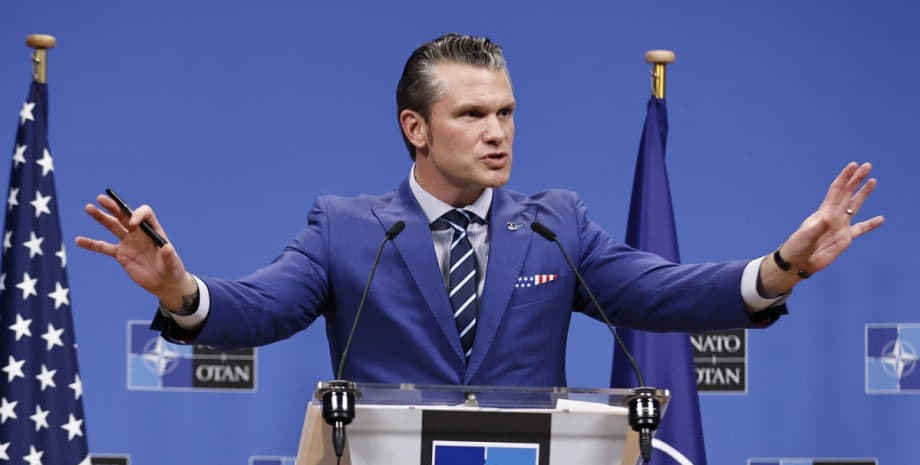
Photo: UNIAN
Key points
- Historical agreements on dividing the world have often been temporary
- Hegemonic attempts often lead to the exhaustion of the empires' own resources
- Ignoring the interests of all parties leads to new conflicts
From Ancient Treaties to Modern Geopolitics
The history of international relations spans millennia of attempts by great powers to divide the world into spheres of influence. Starting with the peace treaty between Ramesses II and the Hittite king Muwatalli II after the Battle of Kadesh in 1274 BC, rulers have sought to cement the status quo. However, experience shows that such agreements rarely become permanent and often serve merely as a pause before new conflicts arise.
A prime example of a large-scale division was the 1494 Treaty of Tordesillas, through which Spain and Portugal divided colonial territories under the auspices of the Pope. This precedent demonstrated that ignoring the interests of other players only stimulates competition, eventually leading to the dominance of new colonial powers. Similar trends were observed in the 18th and 19th centuries, particularly after the 1815 Congress of Vienna, where the Russian and Austrian Empires attempted to solidify their influence on land.
Why Agreements on 'Greatness' Often Collapse
The desire of modern leaders to enter into such 'pacts' is often driven by a quest for recognition of their own imperial greatness. Historical parallels suggest that membership in the 'hegemon club' is frequently accompanied by significant economic and human costs for the states seeking dominance. Ultimately, the emergence of a 'third force' or a shift in the balance of power has always nullified attempts to artificially divide the world into spheres of influence.
Source UNIAN — unian.ua/world/zustrich-putina-i-trampa-z-si-chi-zmozhut-voni-podil… ↗
Read next
 🛡️Security
Lithuania develops new plan to strengthen border with Russia's Kaliningrad region
The Lithuanian Ministry of Internal Affairs has prepared a comprehensive security plan for the border with Russia's Kaliningrad region, involving physical barriers.
 🚌Transport
Zelenskyy Explains Crimean Bridge Strikes as Response to Ukrainian Infrastructure Destruction
The President of Ukraine described the attack on the Kerch crossing as a legitimate response to Russia's systematic destruction of Ukrainian bridges and railways.
 💼Economy
Poland Prepares for Possible Influx of Refugees from Ukraine
The Polish government has developed three scenarios to respond to a possible influx of refugees from Ukraine during the winter of 2026-2027. It is expected that Russian a…
 🇺🇦Ukraine
US and Venezuela Announce Strengthened Defense Partnership
US Secretary of Defense Pete Hegseth met with interim President Delcy Rodriguez in Caracas to agree on enhanced military cooperation.
 💼Economy
Berlin develops mechanism to protect financial aid to Ukraine from political risks in the EU
Germany has initiated a reserve financial mechanism that will allow the EU to continue supporting Ukraine even if political vectors change in member states.
 💡Tech
South Korean defense startup refutes fake news about ceasing operations in Ukraine
The startup Newtype has officially confirmed it continues its work in Ukraine, labeling reports of its closure as a Russian disinformation operation.