Fusion Energy in Space: A New Perspective on Power Supply
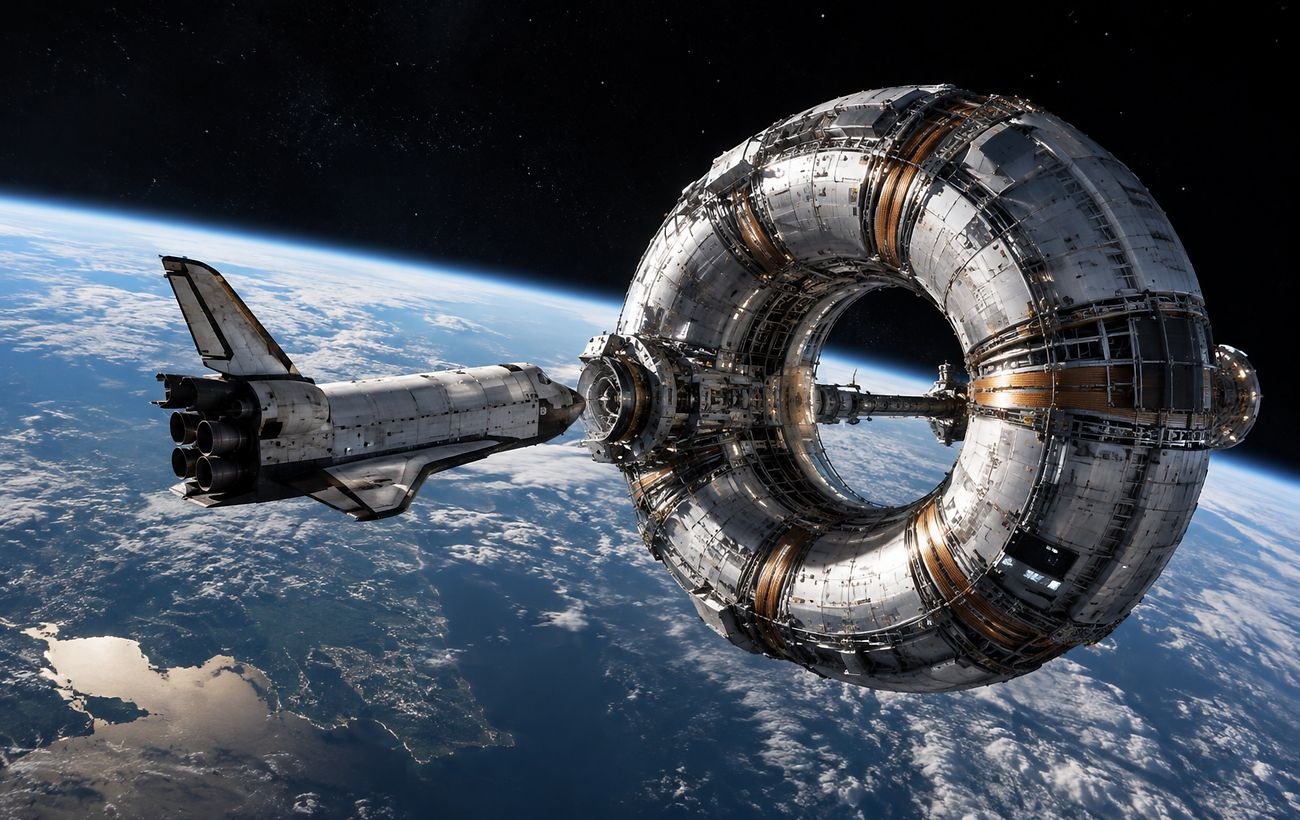
Scientists are exploring the possibility of placing fusion reactors in orbit to power future space missions and settlements.
 💡Tech
Photo: RBC-Ukraine
Key points
- Placing fusion reactors in orbit
- Advantages of microgravity for tokamaks
- Alternative to fission reactors
Prospects for Orbital Energy
Researchers are studying the concept of moving fusion reactors beyond Earth. According to a publication in ResearchGate, placing tokamaks in geostationary orbit could solve the efficiency challenges of power supply for remote space objects. Physicist Yang Bae of the Spacefaring Research Institute notes that the space environment provides unique advantages for the operation of such facilities.
Advantages of Microgravity and Vacuum
Among the key factors making space attractive for fusion are the absence of atmospheric pressure and the effects of microgravity. This allows for reduced structural weight and lower mechanical stress on the reactor. Furthermore, open space simplifies the cooling system: excess heat can be effectively dissipated through special panels.
The project envisions creating a 1-gigawatt tokamak, which could theoretically power a million homes or large-scale orbital infrastructure. In addition to magnetic plasma confinement, the use of lasers to initiate reactions is also being considered. While these ideas remain theoretical, they are viewed as a safer alternative to the fission reactors currently planned for lunar use.
Source RBC-Ukraine — rbc.ua/ukr/news/termoyaderni-reaktori-hochut-vidpraviti-kosmos-1795… ↗
Read next
 🛡️Security
Rescue operation in Dymer: 89-year-old woman pulled from rubble of destroyed building
Search and rescue operations continue in Dymer, Kyiv region, after a drone strike. The death toll has risen to nine people.
 🛡️Security
Russian corvette 'Merkuriy' reportedly hit by Ukrainian drones in Libya
A Russian warship exploded in the port of Benghazi, with reports suggesting a potential attack by maritime drones.
 🛡️Security
Russia testing NATO defense algorithms through airspace violations, expert says
Retired Ukrainian Colonel Dmytro Kashchenko claims that Russian missile and drone incursions into NATO territory are calculated tests of the Alliance's readiness.
 🩺Health
Scientists revive bacteria frozen for 40,000 years in permafrost
Researchers from the University of Colorado have discovered that ancient microorganisms can become active after thawing, posing potential risks to the global climate.
 💼Economy
Farmer from Cherkasy region grows a 350-kilogram giant pumpkin
A resident of Smila, Oleksiy Buryachenko, grew a giant pumpkin on his plot, which became the largest in Ukraine, and gave it away for free to the public.
 🇺🇦Ukraine
US Director of National Intelligence: Putin is not a friend of America regarding Ukraine
Director of National Intelligence Jay Clayton clarified the distinction between Donald Trump's diplomatic rhetoric and the reality of US-Russia relations.